Ty Andros (Financial Sense, Friday) repeats the point made by Jim Puplava (which we reported earlier this summer), that the credit agencies' re-rating of subprime packages have ignited an explosion inside the banking system, but this may only be the detonator that sets off the main charge:
Whereas the big banks and investment houses can hide behind tier three and pray for a market recovery, the investing community cannot. Pension funds, institutions and money market funds, have fiduciary investment covenants which direct them to sell securities which are below certain ratings levels. Once an investment falls into the lower rungs on the investment scales they are bound by their own investing rules to divest the assets.
Tens of billions of dollars of securities have been downgraded since the beginning of October and this will require that they be sold in a timely manner. Once those securities hit the markets we will know their true value, and it won’t be pretty. The super SIV will quickly become an exercise in wishful thinking as their “high quality” paper becomes junk in the maelstrom of liquidation which increases every time a security is downgraded. The super SIV’s whole reason for being was to prevent fire sales and price discovery.
Saturday, November 03, 2007

Stuffed at both ends
 A duck and a crane being stuffed with food in Ancient Egypt
I overheard a classroom assistant talking about her monster mortgage and how it's gone up another £300 a month - just as the Council is planning to cut the pay of thousands of workers in order to tackle its huge budget deficit. Should she sell? Just as everybody else is considering the same course of action?
We look at our situation and grumble that we're stuffed, but Dr Housing Bubble (Financial Sense, yesterday) demonstrates how we're force fed with credit and high prices at the front end, too.
The figures will differ from one person to another. Do your own math, and work out what you should do - soon.
Bubble priced
"... my best estimate is that a full thirty percent of the market's current "value" is based upon fraud and deception, and not on actual value"
... says Genesis (Karl Denninger) on his site, Market Ticker yesterday. He has already organised a petition, and is now calling for a shatteringly large class-action suit against American banks.
... says Genesis (Karl Denninger) on his site, Market Ticker yesterday. He has already organised a petition, and is now calling for a shatteringly large class-action suit against American banks.
"Dow 9,000" prediction: accelerating decline

November 2: Dow at 13,595.10, gold $806 per ounce. Since July 6, Dow has appeared to hold its ground, but the "gold-priced Dow" has dropped to 10,925.83 - a fall of over 49% annualised. And at this rate, gold will have doubled in dollar terms by July 2008.
China Olympics: Starter's Gun For Inflation

Robert Gottliebsen in Australia's Business Spectator (Thursday) gives thanks for Ben Bernanke's inflationary rescue of the banking system, but points out that the flight from devaluing US securities is driving demand for assets elsewhere. And there are longer-term consequences to face:
Before the latest US crisis developed my friends in China told me that many Chinese manufacturing businesses would try to raise prices by 10 per cent in 2008 -- probably after the Olympics. That determination will now be intensified because the manufacturers are not only receiving lower returns but are being forced to pay more for oil and commodities. Those seeking shelter from the US dollar will drive up prices.
Bernanke’s actions, even though they are justified, are going to inflame US inflationary pressures. So later in 2008 and in 2009 he will need to reverse the current process and increase interest rates. That will not be good for stock markets or commodities because it will reverse the current forces. But just how serious it will be for the US will depend on whether the current Bernanke medicine worked and the banking breakdown was repaired.
I think there is a chance it will work because rising stock markets are a powerful drug. But no one can be certain, and this is a very dangerous period.
Friday, November 02, 2007
Twang money - again
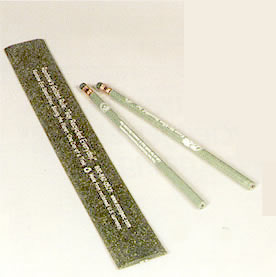
Fiat currency can be expanded at will, but in a credit crunch can contract as easily, so I've previously nicknamed it "twang money". But it turns out there actually once was a medium of exchange known as "twang money" - the Hungarian pengo. It ended up as the worst case of inflation in history: someone writes in to today's Daily Mail (page 77) to say that by 1946, all the Hungarian banknotes in circulation, taken together, were worth one-thousandth of a US cent.
However, consider the potential uses of many tons of durable paper with run-resistant colours: wallpaper, sweet wrappers, firelighters... So for me, the story is about the buying opportunity when pessimism ignores intrinsic value.
The Clashing Rocks
 Martin Hutchinson (Money Morning, today) sees the Fed caught between a rock and a hard place: as the dollar drops, oil and commodity prices go up and so American inflation worsens; if the dollar is supported by higher interest rates, the already-frail housing market stalls and maybe dives.
It's said that the Chinese pictogram for "crisis" combines the ideas of "threat" and "opportunity". Hutchinson offers ideas for those who want to take advantage: invest in...
- Japan
- gold
- natural resources
- Canadian oil
- - and a Korean bank.
Thursday, November 01, 2007
"Wall of Worry" poll results
It seems respondents are as much confused as I am, about which way to go. I quoted Benjamin Graham's advice for passive investors, which is to strike some balance between equities and high-quality bonds, anywhere from 25:75 to 75:25, with a default position of 50:50.
The results are almost exactly divided: 8 at the top end for equities, 8 at the bottom for bonds, 7 voting for a 50:50 split, and one for 65% equities/35% bonds.
The results are almost exactly divided: 8 at the top end for equities, 8 at the bottom for bonds, 7 voting for a 50:50 split, and one for 65% equities/35% bonds.
Another snort to keep going
Chris Ciovacco in SafeHaven today reads the historical charts and concludes that recent multiple Federal Reserve rate cuts are slightly bullish indicators:
... From my perspective, almost all the items above slightly favor the reflation trade over gloom-and-doom. However, the edge is small enough to remain diversified while keeping a close eye on the stock market's 50 and 200-day moving averages.
This would chime with Jim Puplava's assessment that "more of the same" will buy us a little more time until the system is exhausted, which he expects to happen around 2009 onwards.
... From my perspective, almost all the items above slightly favor the reflation trade over gloom-and-doom. However, the edge is small enough to remain diversified while keeping a close eye on the stock market's 50 and 200-day moving averages.
This would chime with Jim Puplava's assessment that "more of the same" will buy us a little more time until the system is exhausted, which he expects to happen around 2009 onwards.
Wednesday, October 31, 2007
There's never just one cockroach in the kitchen
... says Warren Buffett, at the trial of a former Freddie Mac chief executive.
Crazy like a fox?
 I've received this unsolicited mail today. As Wavy Gravy said at Woodstock, there's a little bit of Heaven in every disaster... or is there?
Uncle Sam and John Bull

Financial Sense yesterday: Adrian Ash points out that the UK has problems similar to America's, and draws comparisons with the economic situation of the 1970s. That word "stagflation" is being spoken again. He's another gold bug.
Frank Barbera looks at the ongoing credit crunch, with Structured Investment Vehicles looking for a rollover investment of £100 billion within the next few months, just as the market in commercial paper is drying up:
Bottom Line: It is simply a long way from over. So what do investors do while trying to make an honest buck? The answer is to expect more turmoil and periodic severe bouts of selling pressure rippling through the financial markets. We are looking at the battle between monetary reflation and debt deflation playing out on the grand stage.
Other bears look at the Thirties for their model. We have an advantage, in that we have the 70s and the 30s to learn from; they didn't have themselves in their history books. As Mark Twain said, "The past does not repeat itself, but it rhymes."

Tuesday, October 30, 2007
Merrill in a panic
 (Picture source)
Charles Merrill, a relation of the Merrill Lynch founder, has become a gold squirrel.
More surprises from Warren Buffett
Warren Buffett wants to pay more tax, according to NBC today.
And he doesn't have an accountant! (How many enemies can you make in one day?)
And he doesn't have an accountant! (How many enemies can you make in one day?)
Money vs The People
 (Picture source)
Money can improve happiness, below a certain income level; but above that point, the relationship is not so clear. And maybe there are distinctions between money, investments and wealth...
In Financial Sense yesterday, Robert McHugh comments:
When the Master Planners devalued the dollar over the past five years, they raised the cost of living for everyone. The Middle Class is getting annihilated from this silent event. Incomes are not keeping up. This was done because this administration “equates stock market success with economic success and has directed their efforts to drive up equities at literally any cost,” to quote one of our subscribers.
...but Tony Allison looks forward to a more energy-efficient future:
Change is seldom welcomed by most humans, but it can often bring about positive results. It is impossible to know what year the effects of peak oil production will barge into our living rooms, but change is on the way. The adjustment period to a permanent supply crunch will likely be very difficult, but some effects may be beneficial. For example, we could see a re-birth in local farming and manufacturing, as food and industrial products become exceedingly expensive to transport. We would see more public transit, more freight train transportation, more bicycles, more energy efficiencies of all kinds working their way into society.
In Financial Sense yesterday, Robert McHugh comments:
When the Master Planners devalued the dollar over the past five years, they raised the cost of living for everyone. The Middle Class is getting annihilated from this silent event. Incomes are not keeping up. This was done because this administration “equates stock market success with economic success and has directed their efforts to drive up equities at literally any cost,” to quote one of our subscribers.
...but Tony Allison looks forward to a more energy-efficient future:
Change is seldom welcomed by most humans, but it can often bring about positive results. It is impossible to know what year the effects of peak oil production will barge into our living rooms, but change is on the way. The adjustment period to a permanent supply crunch will likely be very difficult, but some effects may be beneficial. For example, we could see a re-birth in local farming and manufacturing, as food and industrial products become exceedingly expensive to transport. We would see more public transit, more freight train transportation, more bicycles, more energy efficiencies of all kinds working their way into society.
Buffett goes South and East
MoneyNews.com (Friday) reports on Warren Buffett's investments in Brazil and South Korea. Apparently the great man has made a pile in Brazilian currency but is now looking to switch to their bonds.
Abroad elsewhere, he's looking for high-dividend companies - a combination of the standard value investing formula and hedging against the dollar.
Abroad elsewhere, he's looking for high-dividend companies - a combination of the standard value investing formula and hedging against the dollar.
Every Picture Tells A Story

My brother sent me this. Just imagine what it would look like if the chart wasn't using a logarithmic scale. Which way from here?
Monday, October 29, 2007
Vote early, vote often
... as the Irish used to say. One more day to go on the Wall of Worry poll and the optimists are winning. Can this be so? If you have votes to cast, prepare to cast them now.
Volume - shares and gold
 (Picture source)
David Yu (Safe Haven, yesterday) comments on the unusually high volume of trade on the NASDAQ recently, and so expects a fallback sometime.
Peter Degraaf (GoldSeek, Friday) thinks gold can't be shorted or held down forever. He reminds us of the extraordinary volumes of bullion traded in 1967-68, and the explosive rise in the price when the containment attempt finally failed. Degraaf believes Frank Veneroso's theory that central banks are surreptitiously dumping gold again today, playing the same game - and expects the same result.
Faber: why the dollar may bounce back
The International Herald Tribune ( October 24) reports a mechanism by which the dollar may recover some lost ground:
Faber said if bubbles in emerging markets deflated, the dollar may rebound from all-time lows against the euro as fund managers who have invested in emerging markets shift investments to the United States.
Faber said if bubbles in emerging markets deflated, the dollar may rebound from all-time lows against the euro as fund managers who have invested in emerging markets shift investments to the United States.
Subscribe to:
Posts (Atom)